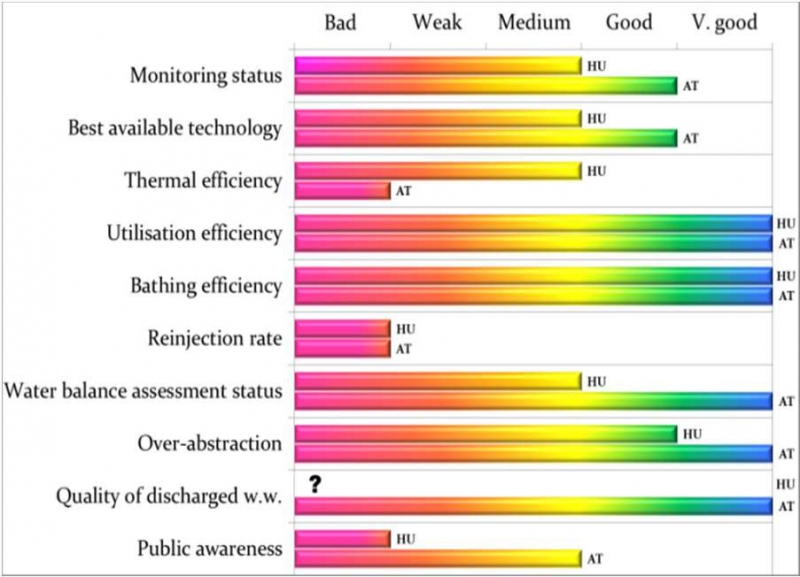
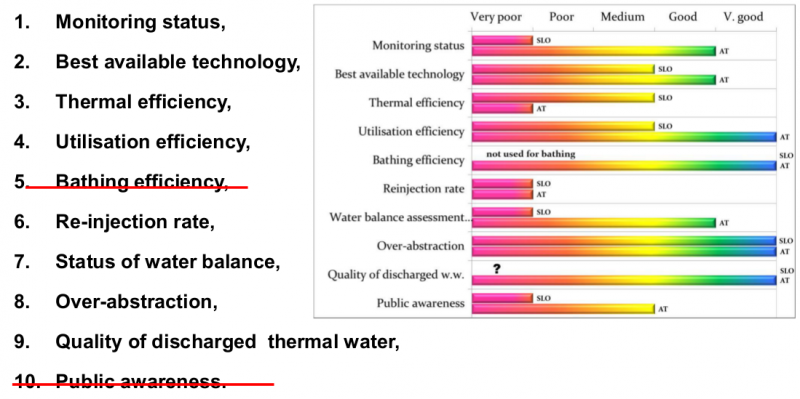
• Tool to quantify and compare the state of geothermal water management at different scales on an unique and harmonised way (Lemano approach)
• Developed for aquifers exploited by multiple users and/or in neighbouring countries to support water permit/concession granting process
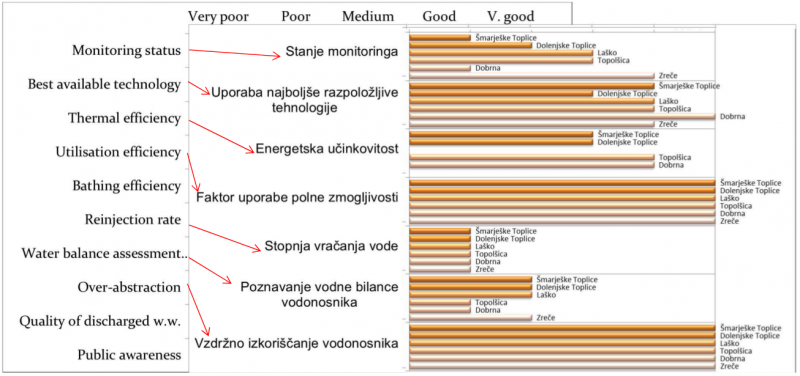
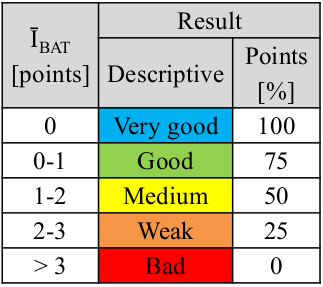
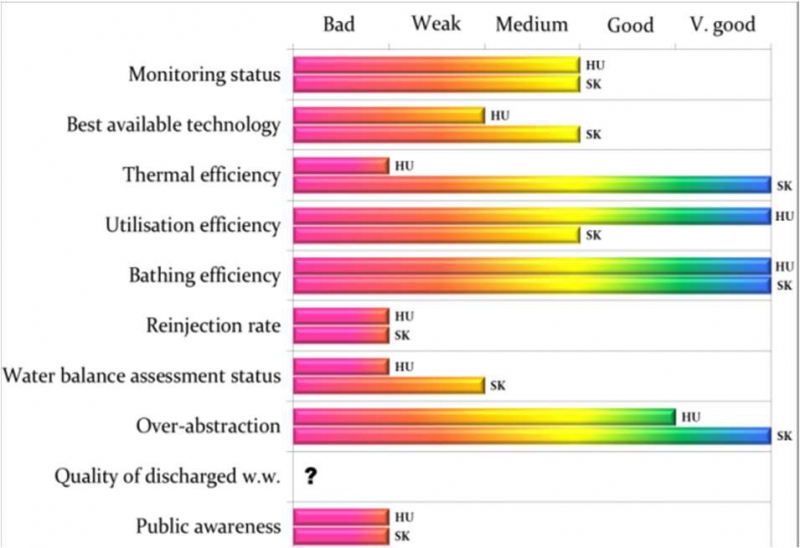
• It comprises a set of indicators presented on charts using five categories (from very poor to very good) and being calculated from allocated points based on physical data or metadata information using transparent formulae
• The input requires detailed data on production, monitoring and permits per a well
• The results are generalised and should not have problems with data privacy
• As an Annex it will complement the general IGRAC Guidelines for Multidisciplinary Assessment of Transboundary Aquifers
Target groups:
Datasets
– Water Framework Directive
– Directive on the Promotion of the Use of Energy from Renewable Sources
– National obligations related to monitoring
– EGEC recommendations for geothermal resources management
– Field inspections and interviews with users
– National datasets
– Field interviews with users
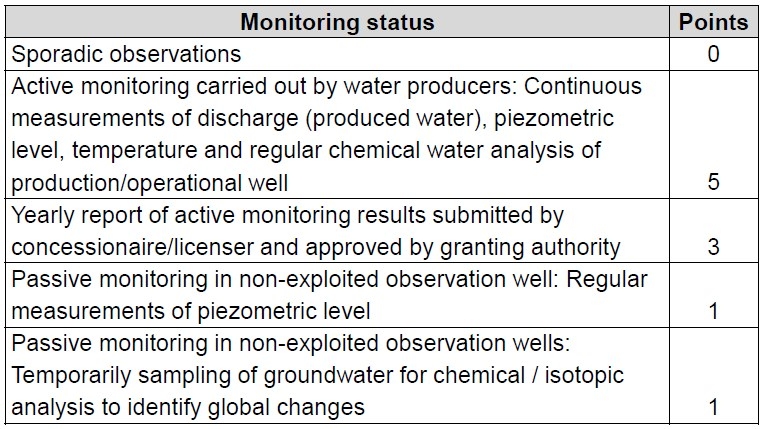
1. Monitoring status
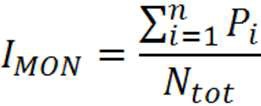 Monitoring→yearly reports→observation wells
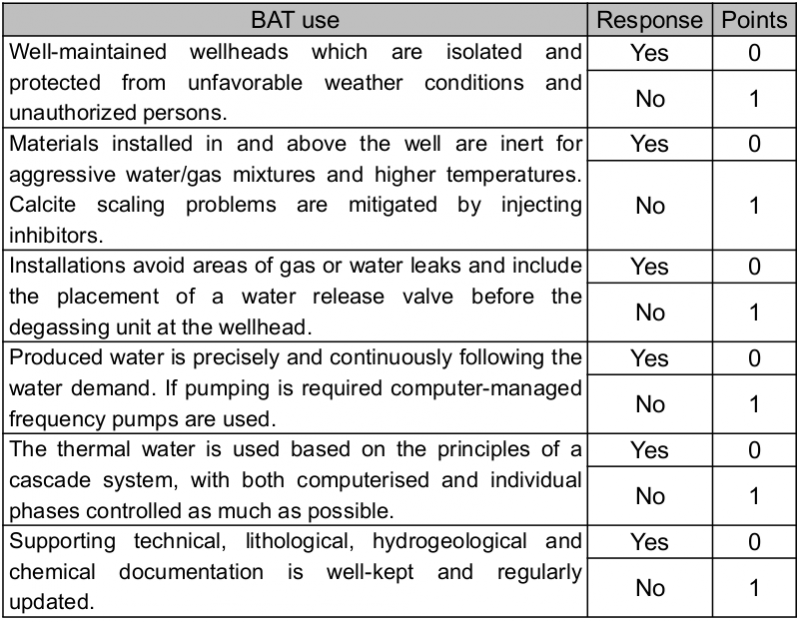
2. Best available technology
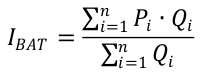 WHD, materials, system, documentation
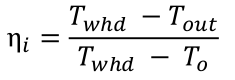
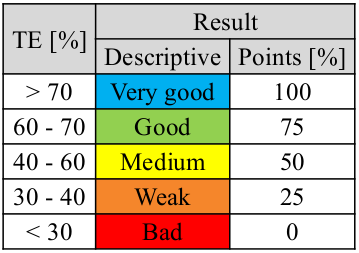
3. Thermal efficiency
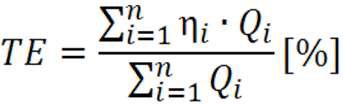 Produced amount, water temp., waste water temp.
4. Utilisation efficiency
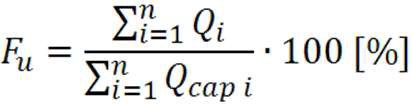 Produced amount, granted amount
5. Re-injection rate
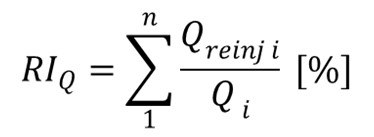 Produced amount, reinjected amount
6. Over-abstraction
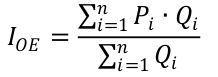 Production changes: GWL, chem., Q
7. Status of water balance
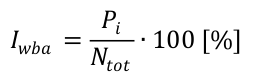 Renewable and available volume, critical point
8. Public awareness
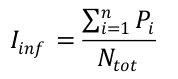 Public data on monitoring, BAT, status, th. effic.
IPi = number of assigned points to a geothermal object i
Ntot = total number of geothermal objects on the basin level in the investigated country
Qi = annual production rate of a geothermal object i (m3 /y)
- ‚Environmental’ parameters supplemented by economic and social parameters
- Weighted and grouped into Environmental, Economic and Social Capital
1. Thermal water quality (appropriate for type of use – scaling, precipitation)
2. Unwanted bacteria in the system (clogging - Fe, for reinjection)
3. Change in the water abstraction/energy production in the last ő years
4. Measures for sustainabe use foreseen in the permit
5. Waste thermal water treatment and quality (sewage systems, ecosystems)
6. Supply problems (peak loads, leakage, unknown by-pass)
7. Heat market demand is fulfilled
8. More details on cascade use
9. Price politics for permits, concessions (how are calculated per m 3 )
10. Availability of management information (procedures, workshops for users...)
11. Permits from exploration to exploitation phase (number, timing, complications)
12. Waste thermal water monitoring and reporting (existing or not)
13. Public awareness (questionnaires of the user‘s staff and locals on the resource)
- water temperature: 20 °C, 30 °C, 50 °C ???
- for production and reinjection data (2015, 2016, 2017, all ?)
- monitoring status, water balance and over-exploitation assessment, publicity of data … (2017, 2018 ?)
Pi = number of assigned points to a geothermal object i
Ntot = total number of geothermal objects on the basin level in the investigated country
Ii = number of assigned points to a geothermal object i
Qi = annual production rate of a geothermal object i (m3y)

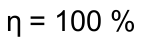
Qww i = annual discharge rate of waste thermal water of a geothermal object i (m3/y)
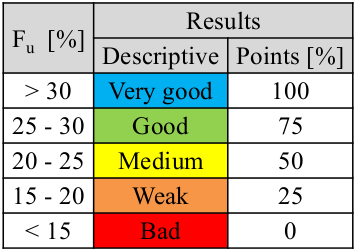
Qcap i = installed capacity of a geothermal site i (≈ maximum allowed annual production as defined in water permit) (m3/y)
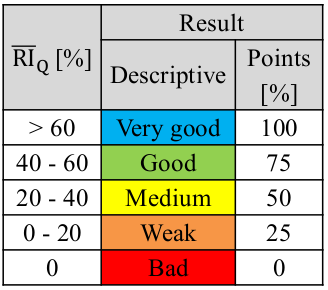
Qabs i = annual production rate of thermal water of a geothermal object i used solely for geothermal heat production (m3/y)
Qreinj i = annual reinjection rate of thermal water of a geothermal object i used for geothermal heat production (m3/y)
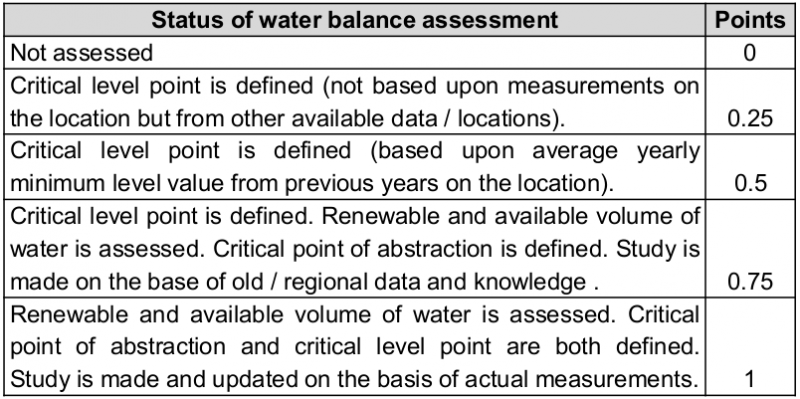
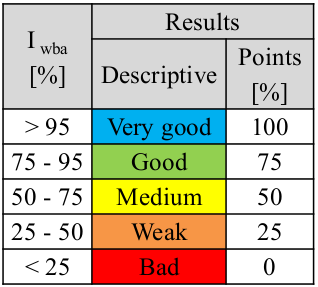
Pi = number of assigned points to a geothermal object i
Ntot = total number of geothermal objects on the basin level in the investigated country
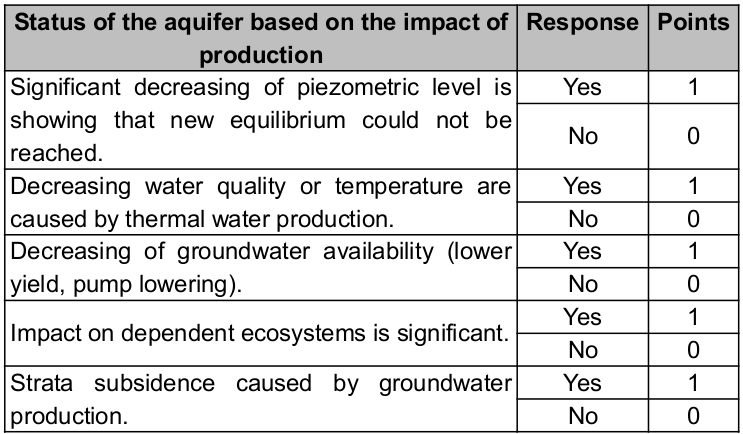
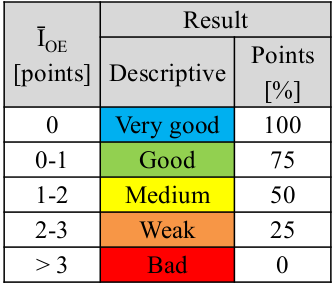
Ii = number of assigned points to a geothermal object i
Qi = annual production rate of a geothermal object i (m3/y)
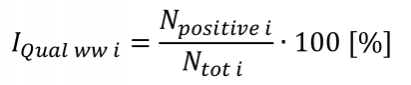
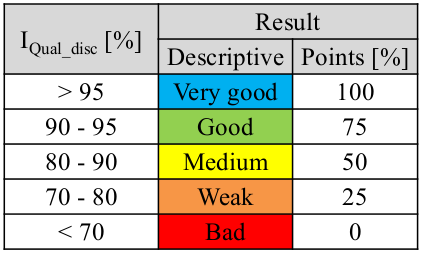
Npositive i = total number of positive samples (which meet the waste water emission requirements) per year of a geothermal object i
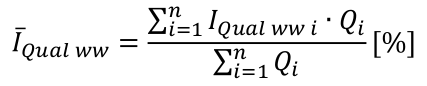
Ntot i = total number of taken chemical samples per year of a geothermal object I
Qi = annual production rate of a geothermal object i (m3/y)
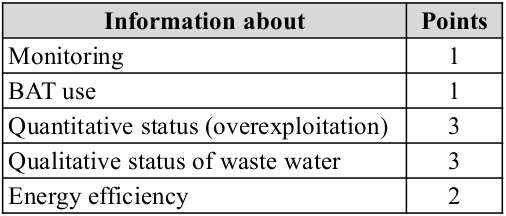
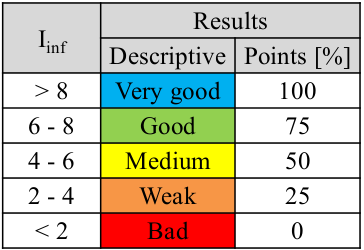
Pi = number of assigned points to a geothermal object i
Ntot = total number of geothermal objects on the basin level in the investigated country
Aquifer:
Aquifer: