Levelized cost of energy (LCOE) of different technologies($ / kWh)
LCOE: net present value of the unit-cost of electricity over the lifetime of a project
LCOE= sum of total costs / sum of electric energy produced
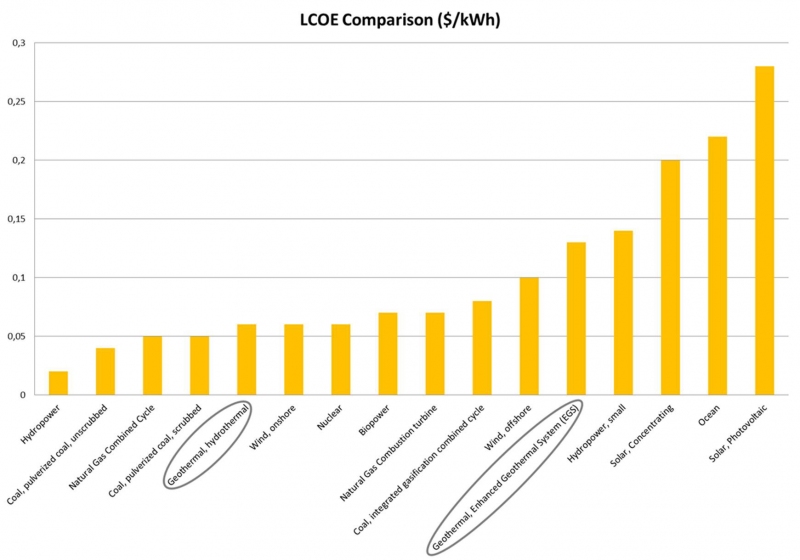
Source: http://en.openei.org/apps/TCDB/
Long Project Lifecycle – Patient investment
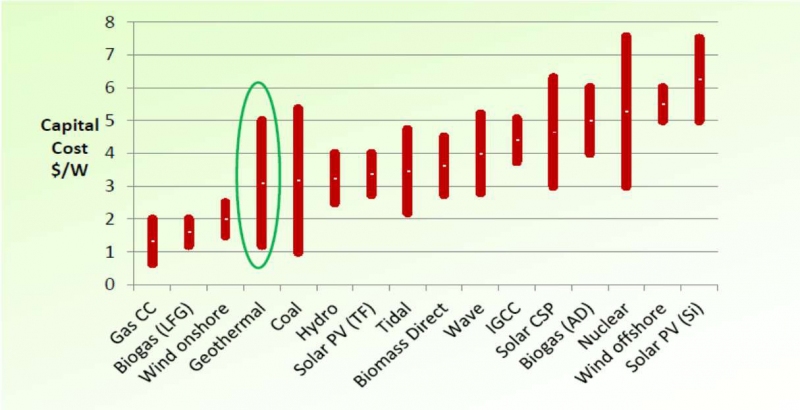
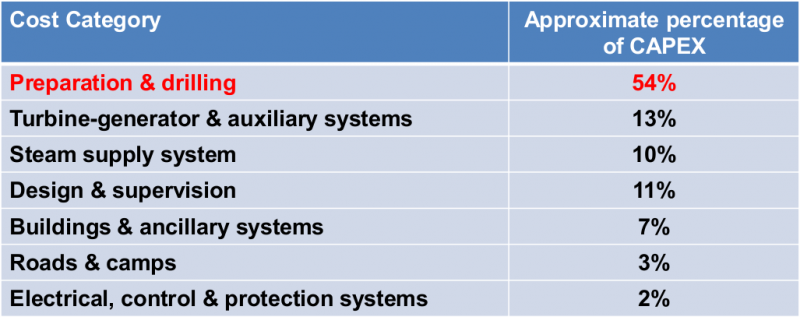
High CAPEX (upfront investment – 55-65% of total costs), low OPEX
CAPEX of geothermal
OPEX of geothermal
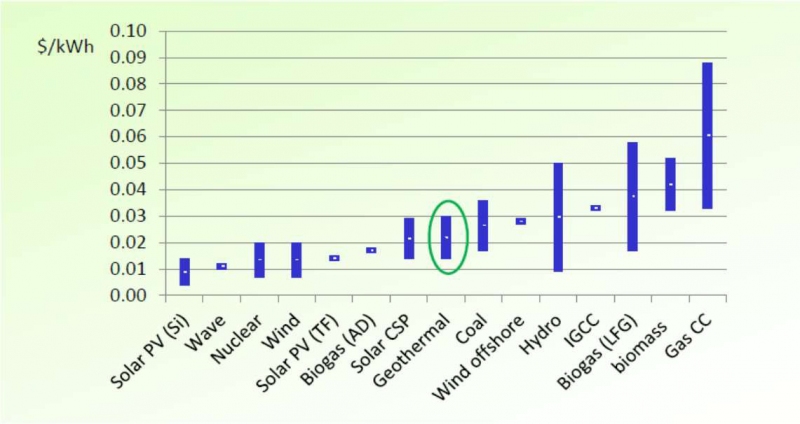
Source: Clean Energy Trends, 2010
Source: Geoelec project
* Example from a 5MW low enthalpy binary Power Plant in Central-Europe
Source: Geoelec project
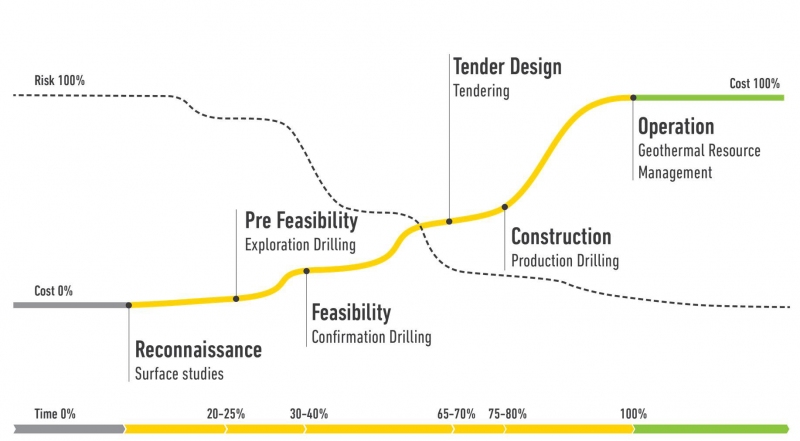
Project risk decreases with increased investment as the project is developed further with research and results from the first well drilling and testing.
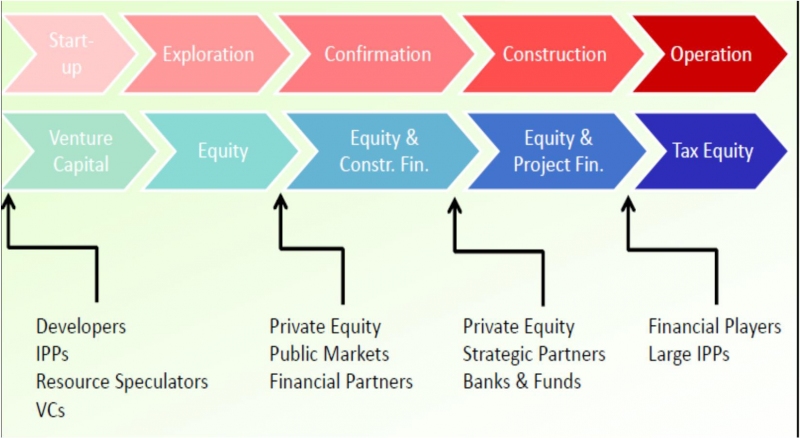
BUT HOW TO COVER THE COSTS / RISKS OF THE FIRST WELL?
Source: Icelandsbanki
Source: GeoDH project
Pre-feasibility study which includes:
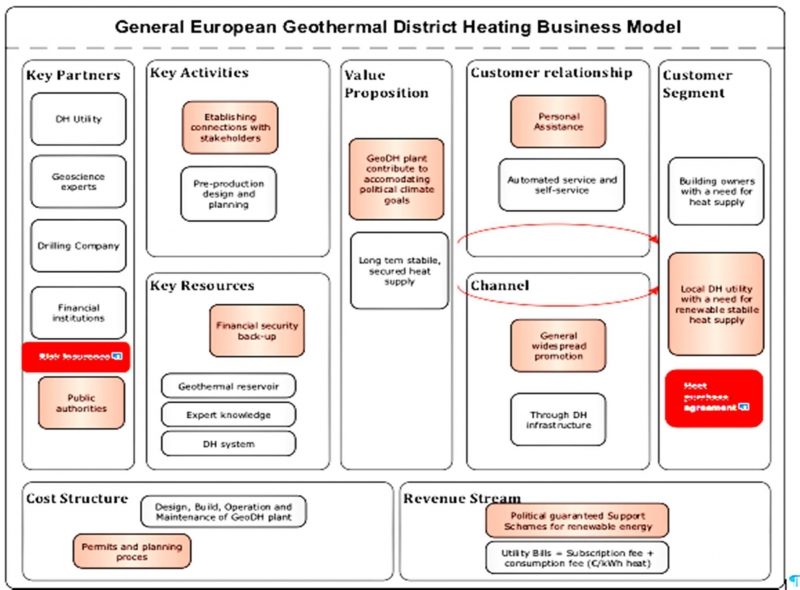
A - Pre-Sales: Project pre-design, MoU for heat purchase agreement with customers and financing research
B - Preliminary survey
C - Prefeasibility study (surface and sub-surface)
GO / NOGO
Geothermal expected potential confirmed and existing customers ready to buy heat at a fixed cost for a long duration which has to exceed the loan period.
Exploration and feasibility study which includes:
A - Detailed studies, including geophysics if possible and permitting to obtain the right to drill a doublet system
B - Negotiation to get a coverage for the first and second well + geothermal loop testing
C - Project economical review and financing strategy
GO / NOGO
Confirmation of geothermal potential (depth, temperature, flow-rate), insurance coverage secured and financial details arranged.
Drilling of wells which includes:
A – Drilling of first well (preferably vertical)
GO / NOGO
The project is stopped if the result of the first well is under a ratio temperature/flow-rate under the limits of the success curve built and annexed in the insurance contract.
B – Drilling of the second well and loop test
GO / NOGO
The project could be stopped at that time if the capacity of the second well is much lower or does not accept to reinject the totality of the flow rate.
District heating construction which includes:
A – Equipment of the geothermal loop (submersible pump, surface injection pumps, electrical variators, heat exchanger installation, chemical treatment if any), monitoring of the loop and testing
B – Construction of the piping network or adaptation of the existing network
C – Construction of the heating station (the closest possible from the drilling pad) or adaptation of the existing one
Commissioning of the whole installation which includes:
A – First year of operation with detailed measurements on the geothermal loop (levels in the wells, well-head pressure, physico-chemistry of the water, pumps electrical consumption, etc …)
B – First year of operation with detailed measurements on the DH network (temperature, water flow rate, return temperature to the exchanger, follow up of back up boilers and calculations of energy balance with the coverage of geothermal
C – Normal exploitation of the plant including well controls, repairs and heavy maintenance and equipment replacement.