Source: Geoelec project
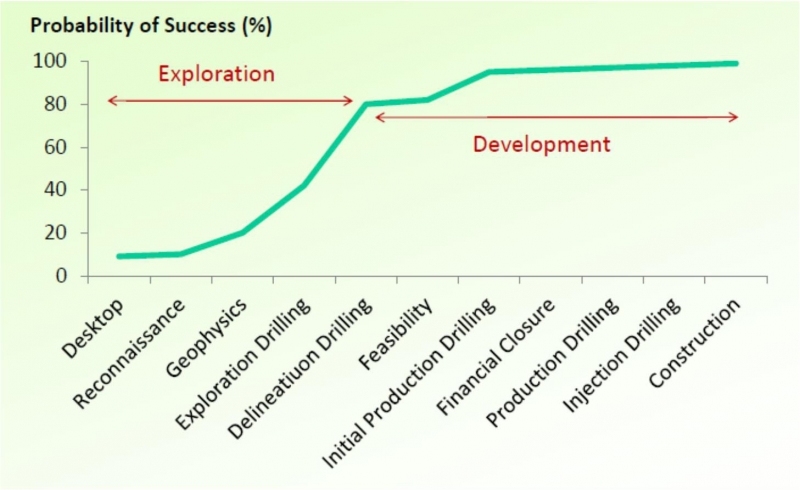
Source: GEA, 2008
-Highest risk during exploration
-Probability of success of the first drilling: 20-60% (depending on the location and pre-drilling geological-geophysical exploration
-Reservoir parameters (temperature, flow-rate) can be estimated only after the first successful drilling
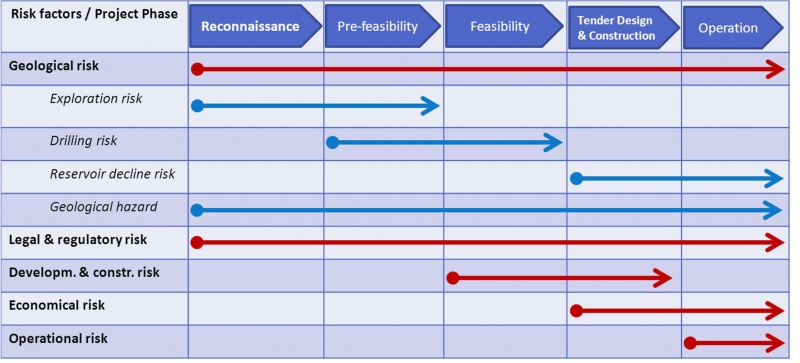
The geothermal resource cannot be accurately assessed until drilling has taken place
Geological Risk
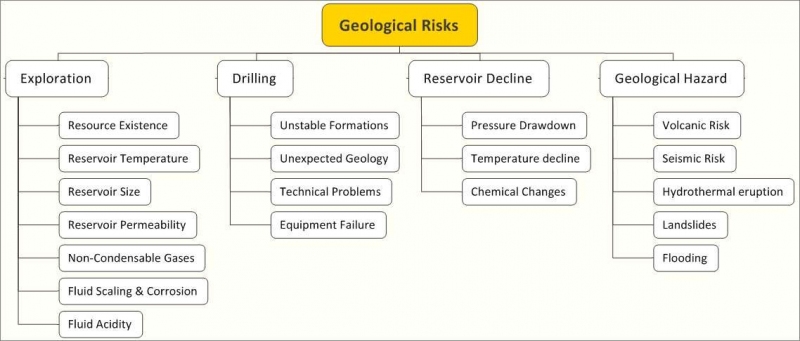
Source: Geoelec project
If a well is underperforming the expectations:
Evaluation of geology:
Planning of well and drilling works:
Supervision of drilling works:
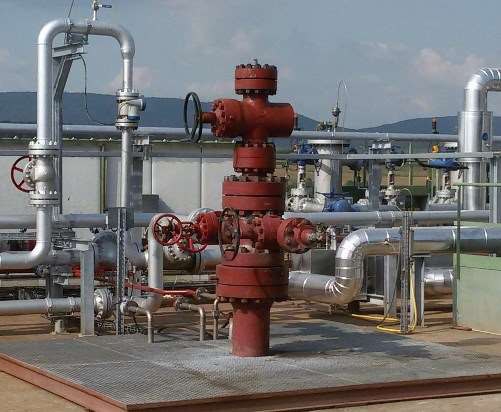
Source: Geoelec project
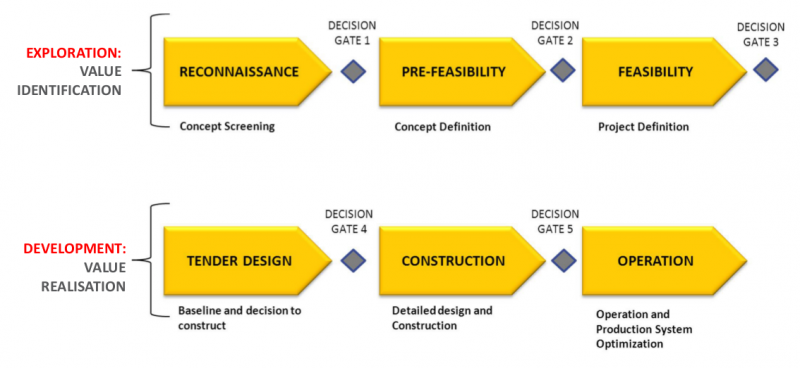
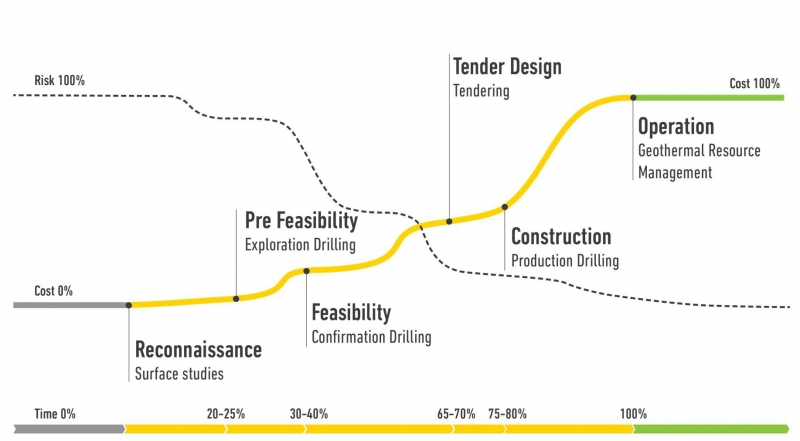
Project risk decreases with increased investment as the project is developed further with research and results from the first well drilling and testing
BUT HOW TO COVER THE COSTS / RISKS OF THE FIRST WELL?
Financial markets have shown a poor understanding of geothermal development projects and tend to overestimate resource risk
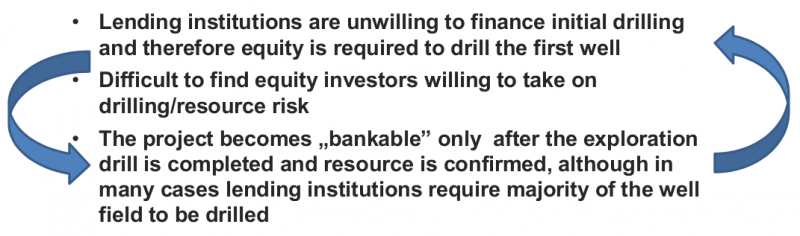
Need for specilized sources of capital to bridge the gap between exploration and construction
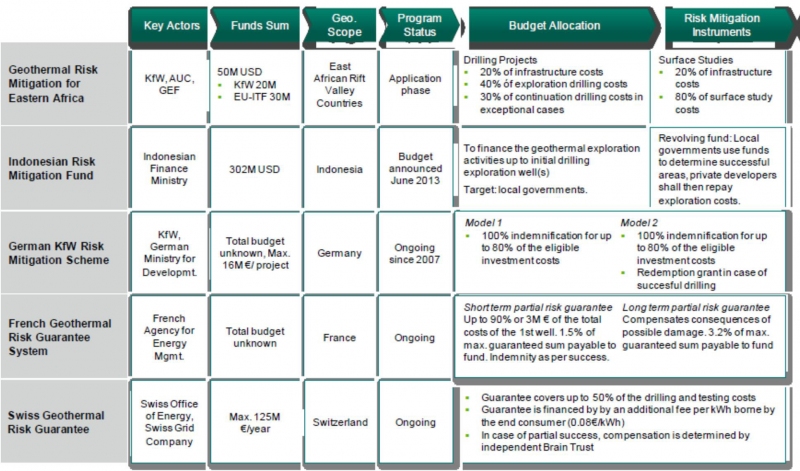
Insured risk: short-term (drilling) (long-term risk – reservoir depletion is a technical risk to be handled by proper production strategy by the operator)
Private insurance: Germany (market-based insurance companies: Munich Re, Swiss Re, Axa, Goather, R&V, Marsh és Willis) – project tailored individual fees (post-damage)
National insurance funds:
Establishment of national funds: capital provided by the state (+ private equity)
Income during opertaion: insurance fees, taxes or other incomes (e.g. feeding back certain proportion of mining fees, etc.)
More diverse income sources - more stable funds
Operators of national funds:
Responsible ministries, governmental institutions
Contract between project developer and insurance company / fund
Conditions laid down in great details:
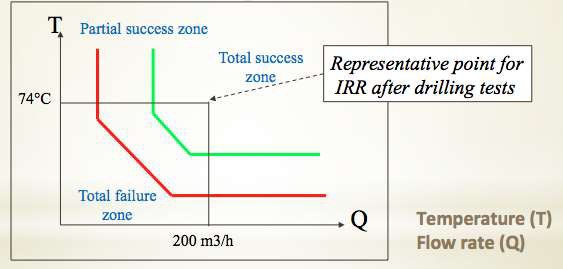
Success criteria: i.e. full / partial failure at which yield / temperature
In case of damage experts compare declared damage by those laid down in the contract and decide on the rate / amount of insurance
Source: Rödl & Partner
European systems
Discovery risks only, any further technical risks (e.g. lost-in-hole during drilling) are not covered
Each system has own success criteria
Needed because of:
Limited current market size
No statistical basis to assess the probability of success
Allow the technology to progress along its learning curve (EGS)
An exclusive management by an EU institution or a shared management with a national institution
A secretariat and a board (shareholders, geothermal professionals, experts, for some applications a representative of the national insurance system)
A seed capital of 50-100 Mio €
The obligation to disclose the data collected